A lifestyle framework forged by failure, refined by science, and built for anyone who refuses to accept that excellence in one area of life must come at the cost of another.
Read My StoryBefore this was a philosophy, it was a childhood spent chasing every ball, board, and finish line in sight.
I was four years old the first time I played a competitive football match. I spent most of it picking my nose on the halfway line, if I'm being honest. But something stuck. By seven, I'd joined the academy at Cambridge United, and for the next eight years, football wasn't just something I did — it was everything I was. Every morning run, every match, every conversation about "making it." I ate, slept, and breathed the game.
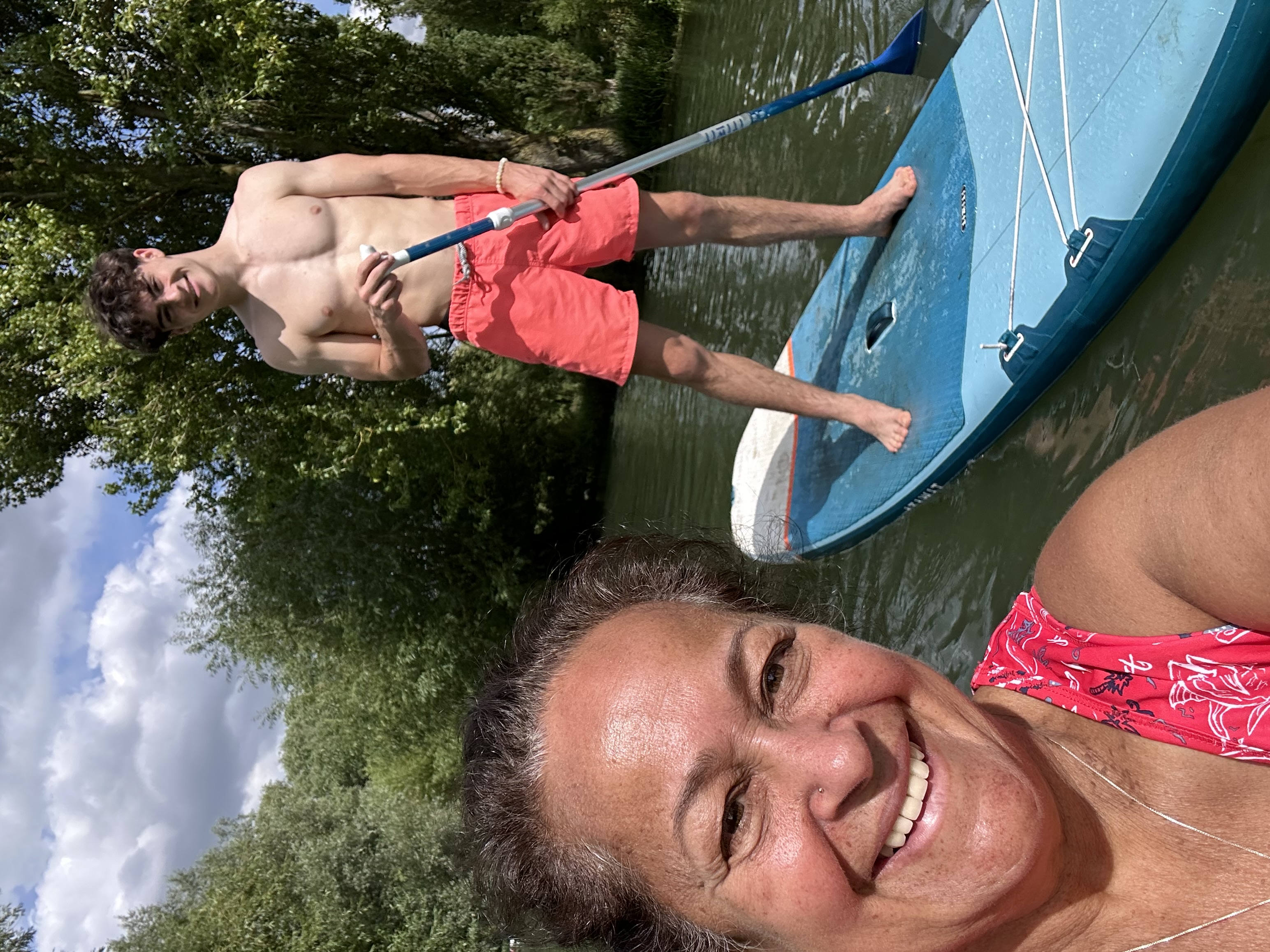
But football was never the only thing. I was swimming before school, running cross-country through Essex mud, playing cricket in the summer, competing in aquathlons, and representing my county at chess. I was lucky enough to grow up with a life so diversified in sport and hobbies that I never had time to be bored — and I'm deeply grateful for that. Not every kid gets to experience that many disciplines, and I owe a lot of it to my mum, who somehow found the time, energy, and finances to get me and my two brothers to every session, every tournament, every event on the planet.
Then at fifteen, Cambridge United released me. I won't lie — at first I thought I was doomed. But looking back now, that release revealed something I couldn't see at the time: I was never just a footballer. All those years of chess, swimming, cricket, calisthenics — they'd built something much bigger than a single sport. The release didn't end my story. It freed me to write a better one.

"The definition of insanity is doing the same thing over and over and expecting different results. I had to change everything."— Connall Harper, on his freshman semester
Fast forward a few years. I'm a Division I athlete in America, studying Business Management. I had the ambition, the drive, the work ethic from years of sport — but I had no idea how to structure any of it. Then midterms hit my freshman semester, and the transcript came back: 1.6 GPA.
Let me be honest with you — that number embarrassed me. Not because I couldn't do the work, but because I knew I could. I've always known I'm intelligent. The tools were all there — years of discipline from sport, a brain sharpened by chess, a body built by calisthenics. I just didn't know how to organise any of it into a system that worked off the pitch as well as on it.
I believe your results should speak so loudly that you never have to open your mouth. Your transcript, your performance, your body, your relationships — they should all be a reflection of the person you claim to be. At 1.6, mine was lying about me. And I wasn't having that.
So I built a system. Not an app, not a productivity hack — a philosophy. A way of living that treats every pillar of life as interconnected, because they are. I clawed that GPA back above a 3.0, and in doing so, I proved something to myself that I now want to prove to you:
The system works. If you follow it, your life will speak for itself.
Each pillar is a load-bearing wall. Remove one, and the whole structure wobbles. This philosophy isn't about perfection — it's about deliberate, joyful pursuit of balance.
Identifying your objective, setting the compass, and understanding why vague goals produce vague results. The foundation everything else is built on.
You are, quite literally, what you eat. Evidence-based nutritional guidance backed by Professor Joyce Harper's research on how diet shapes performance and health.
From academy football to calisthenics — movement as medicine. How structured physical training sharpens the mind and fortifies the body.
The single most underrated performance enhancer on the planet. The science of sleep, and the body hacks that help you actually get enough of it.
Friendships, community, and the people who hold you accountable. Because nobody thrives in isolation, no matter how disciplined they are.
Chess for my county, cold-water swimming, calisthenics — how hobbies sharpened my football brain and built the cognitive edge that makes you dangerous in your main discipline.
"I want to give you the tools to empower you to live a healthy, happy and fulfilled life."— Professor Joyce Harper, "Why Didn't Anyone Tell Me This?" Podcast
Every claim in this philosophy is rooted in science. And the scientist I trust most happens to be my mum.
Professor of Reproductive Science at University College London. Over 30 years in fertility, genetics, and women's health. More than 260 scientific publications. Fellow of the Royal College of Pathologists. Recipient of the British Fertility Society's Lifetime Achievement Award and ESHRE's Outstanding Contribution Award. Her podcast, "Why Didn't Anyone Tell Me This?", is listened to in over 90 countries and sits in the top 10% of podcasts globally.
But here's the thing — before she was any of those titles, she was the woman who raised me. She's the one who taught me that health isn't a luxury, it's a foundation. That the body and mind aren't separate departments — they're the same company. And that evidence-based living isn't boring — it's freedom.
Her framework — the Pillars of Health (nutrition, exercise, sleep, mental health, friendships) and the Pillars of Happiness (hobbies, creativity, relaxation, adventures, purpose, love) — is the scientific backbone of everything you'll read on this site. I've taken her research, combined it with my lived experience as an athlete, and built something that bridges the lab and the locker room.
She once told me something that stuck: "Beat your sugar addiction and spend more time being still." Simple advice. Took me years to listen. Don't make the same mistake.
Look — I'm not going to sit here and tell you this will be easy. It won't. If it were easy, everyone would already have a 4.0, a six-pack, eight hours of sleep, and a thriving social life. They don't.
But I will tell you this: these pillars are not independent. When you fix your sleep, your training improves. When your nutrition clicks, your focus in the classroom sharpens. When your relationships are strong, your mental health holds up under pressure. When your hobbies stretch your brain, your sport benefits in ways you never expected.
This isn't just my opinion. It's backed by Professor Joyce Harper's research, by the experts she interviews on her podcast, and by the peer-reviewed science they cite. And it's been tested — by me, in real time, with real stakes.
From a 1.6 GPA to a transcript I'm no longer embarrassed by. From being released at fifteen to competing at Division I level. From chaos to clarity.
This philosophy isn't about being perfect. My mum would be the first to tell you — she was in her fifties before she started making some of these changes herself. It's never too late, and it's never too early. The point is to start.
"I want women — and everyone — to understand how their bodies work. Knowledge is power, and when you understand the science, you make better decisions."
— Prof. Joyce Harper, UCLStart with the pillar that speaks to you, or take the self-assessment to discover where your philosophy needs the most attention.
Take the Self-Assessment