Relationships & Community

Discipline gets you started. Talent keeps you competitive. But the people around you? They determine how far you go.

Nobody Thrives Alone

This isn't the soft pillar. It might be the most important one.

The Woman Who Taught Me Everything

I could write about the science of social connection. I could cite Harvard's 85-year longitudinal study that found relationships are the single strongest predictor of happiness and longevity. I will, actually — but first, let me tell you about my mum.

Professor Joyce Harper raised three sons as a single mother while building a career that spans over 260 publications, two Master's programmes at UCL, a podcast in 90+ countries, and more awards than I can list without it sounding like I'm bragging. Which I absolutely am.

She taught me that love isn't passive. It's in the meal she cooked after a twelve-hour day in the lab. It's in the way she drove me to training when she could barely keep her eyes open. It's in the fact that she still checks in on me now, from across an ocean, because that's what proper relationships look like — they don't stop when it's inconvenient.

This pillar exists because of her. And the science she's spent her career building confirms what she showed me by example: human connection isn't optional. It's foundational.
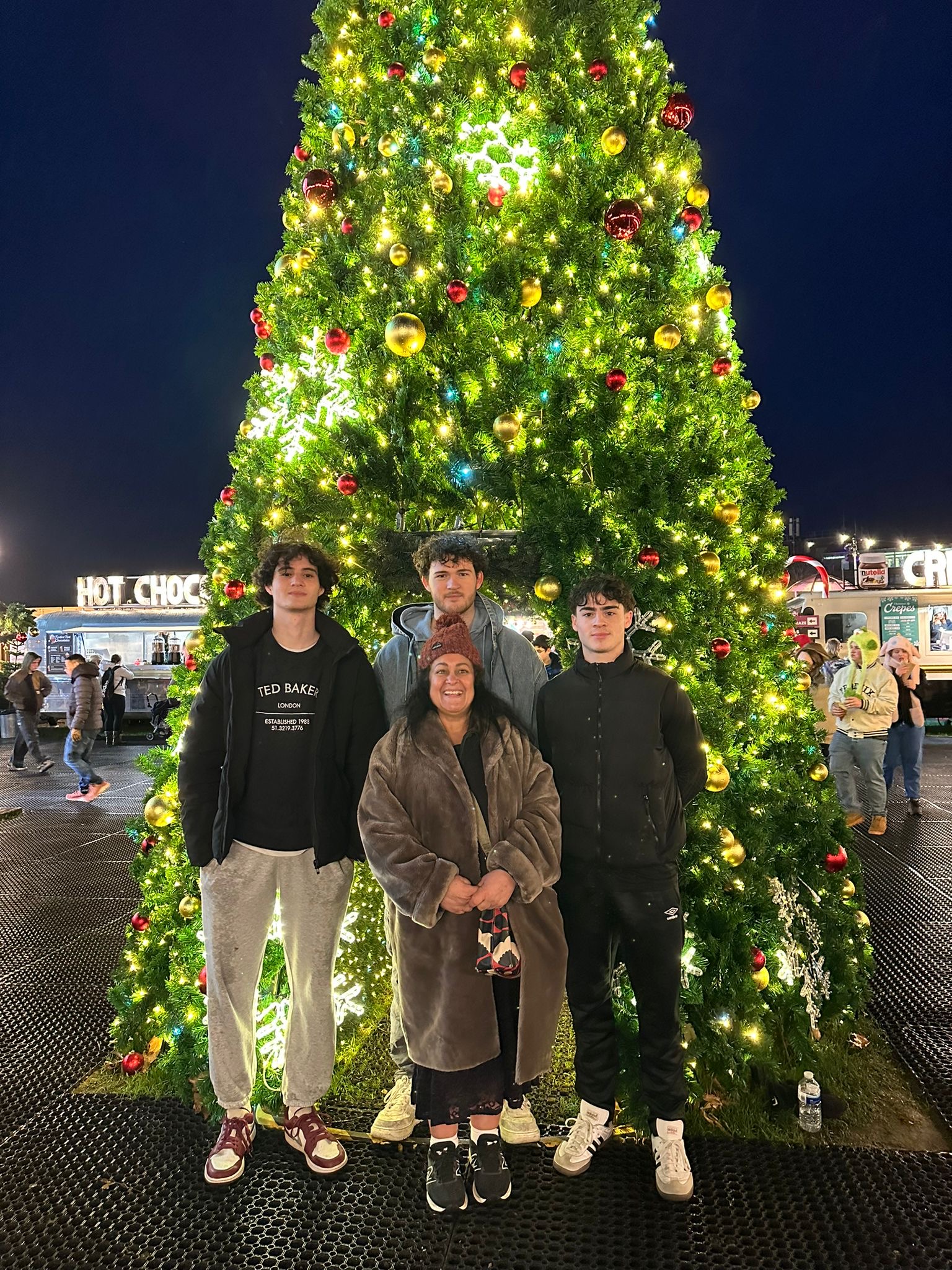
The Harper family — Joyce and her three sons
"Friendships and community are not extras — they are pillars of health, equal in importance to nutrition, exercise, and sleep."
— Professor Joyce Harper, "Your Joyful Years" (2026)

Why Connection Is a Health Intervention

Professor Harper's Pillars of Health & Happiness

In "Your Joyful Years," Professor Harper identifies friendships and community as one of the five Pillars of Health — placing it alongside nutrition, exercise, sleep, and mental health. This isn't sentiment. It's science.

Her Pillars of Happiness framework takes it further, adding sex and love as a distinct pillar. The message is clear: intimate relationships, friendships, and community belonging aren't lifestyle bonuses — they're biological necessities.

  • Social isolation increases mortality risk by 26% — comparable to smoking 15 cigarettes a day (Holt-Lunstad et al., 2015).
  • The Harvard Study of Adult Development (running since 1938) found that the quality of relationships at age 50 was the single best predictor of health at 80 — better than cholesterol, genetics, or income.
  • Oxytocin, released during meaningful social interaction, reduces cortisol, lowers blood pressure, and accelerates wound healing. Your relationships literally heal you.

Loneliness vs. Health Risk Factors

Social Isolation
High Risk
Smoking (15/day)
High Risk
Obesity
Moderate
Physical Inactivity
Moderate

Meta-analysis: Holt-Lunstad et al., PLOS Medicine, 2010

The Three Circles of Connection

Not all relationships serve the same purpose. Understanding the circles helps you invest wisely.

01

The Inner Circle: Family & Mentors

These are the people who see you at your worst and stay. My mum, who drove me to training at 6am and still calls to check I'm eating properly from 3,000 miles away. Your coaches, your parents, the people who invested in you before you had anything to offer in return.

  • Call them weekly. Not text — call. Voice builds connection that text erodes.
  • Express gratitude explicitly. Don't assume they know. Tell them.
  • Protect this circle fiercely. These people are irreplaceable.
02

The Middle Circle: Teammates & Friends

Your teammates see you grind. They hold you accountable on the days you don't feel like showing up. In Professor Harper's words, friendships and community are a pillar of health — and your team IS your community. The locker room is where bonds are forged under pressure.

  • Be the teammate you need. Accountability is a two-way street.
  • Share meals together. Eating with others strengthens social bonds (there's actual research on this).
  • Show up when it's hard. Anyone can be there for the wins. Real ones are there for the losses.
03

The Outer Circle: Community & Networks

Professor Harper co-founded Global Women Connected and organised Purple Tent events celebrating community. She spoke at the UN. She builds community wherever she goes — not because it looks good on a CV, but because humans are social animals who deteriorate in isolation.

  • Join something. A club, a study group, a swimming group, a chess club. Structured social contact reduces loneliness even when you're introverted.
  • Help others. Volunteering and mentoring release the same oxytocin as receiving help — sometimes more.
  • Be findable. Don't hide in your dorm room. The relationships that change your life often start by accident.
"The Big Swim: Why women swim — because community is built in cold water, through shared challenge, and alongside people who understand."
— "Why Didn't Anyone Tell Me This?" S4 E3, International Women's Day Special

How Relationships Fuel Performance

A 2018 study in the Journal of Sports Sciences found that athletes who reported high-quality relationships with teammates performed 15-20% better under pressure than those who trained in isolation. The mechanism? Social support buffers cortisol response to stress. When you know someone has your back, your body doesn't panic as hard.

In the classroom, the data is equally clear. Students who study in groups and have strong friendship networks consistently outperform isolated students, even when controlling for intelligence and study hours. It's not about getting answers from friends — it's about the accountability and emotional regulation that come from being known.

My mum understood this intuitively. She built communities everywhere — at UCL, through her podcast, through her retreats in Brighton and the South of France. She once organised charity coastal hikes for Macmillan Cancer Support, combining movement, nature, and social connection into one event. That's the philosophy in action: pillars don't stand alone.

"Spilling the tea on taboos — because the conversations we avoid are often the ones that matter most."

— Jinty Sheerin & Lou Hockings-Thompson (Womenkind Collective), on "Why Didn't Anyone Tell Me This?" S4 E10

Tips for Better Relationships

  • Quality over quantity. Five deep friendships beat fifty acquaintances. Every study confirms this.
  • Vulnerability is strength. The Womenkind Collective episode on Joyce's podcast proved it — breaking taboos and being honest builds trust faster than any networking event.
  • Protect your energy. Some relationships drain you. The philosophy says: invest in the ones that recharge you, and have the courage to step back from the ones that don't.
  • Be present. Put the phone down. Look people in the eye. Active listening is the cheapest and most powerful relationship tool that exists.