Hobbies & Cognitive Cross-Training

The things you do for joy aren't distractions from your goals. They're the secret weapons that make you dangerous in your main discipline.

How Chess Made Me a Better Footballer

Representing my county at chess didn't distract from football. It sharpened it.

The Most Underrated Competitive Advantage

When I tell people I represented my county of Essex in chess as a child, they look at me like I've told them I collect stamps. "You? Chess?" As if an athlete can't also think. As if moving a pawn and making a tackle exist in different universes.

They don't. Chess taught me pattern recognition — the same skill that lets a midfielder read a defence before it forms. It taught me consequences thinking — if I move here, what happens three moves from now? On a chessboard, that's calculating whether to sacrifice a bishop for positional advantage. On a football pitch, that's the ability to break lines with a single pass, to play a through ball that splits two centre-backs because you've already read where the full-back is going to step up. It's making a run off the shoulder of the last defender because you've anticipated the next two phases of play before anyone else on the pitch has.

Chess gave me the processing speed to see things others missed. The ability to assist teammates with passes they didn't even know they wanted yet — because I'd already calculated the space three moves ahead. While other kids at Cambridge United were playing FIFA after training, I was training my brain to think in sequences. And I genuinely believe that's why I saw the game differently. The problem was never my football brain — it was my body at fifteen. My brain was fine. Chess made sure of that.

This philosophy argues — forcefully — that hobbies are not optional luxuries. They are cognitive cross-training. They stretch your brain in directions your main discipline never will, and the transfer effect is scientifically documented.
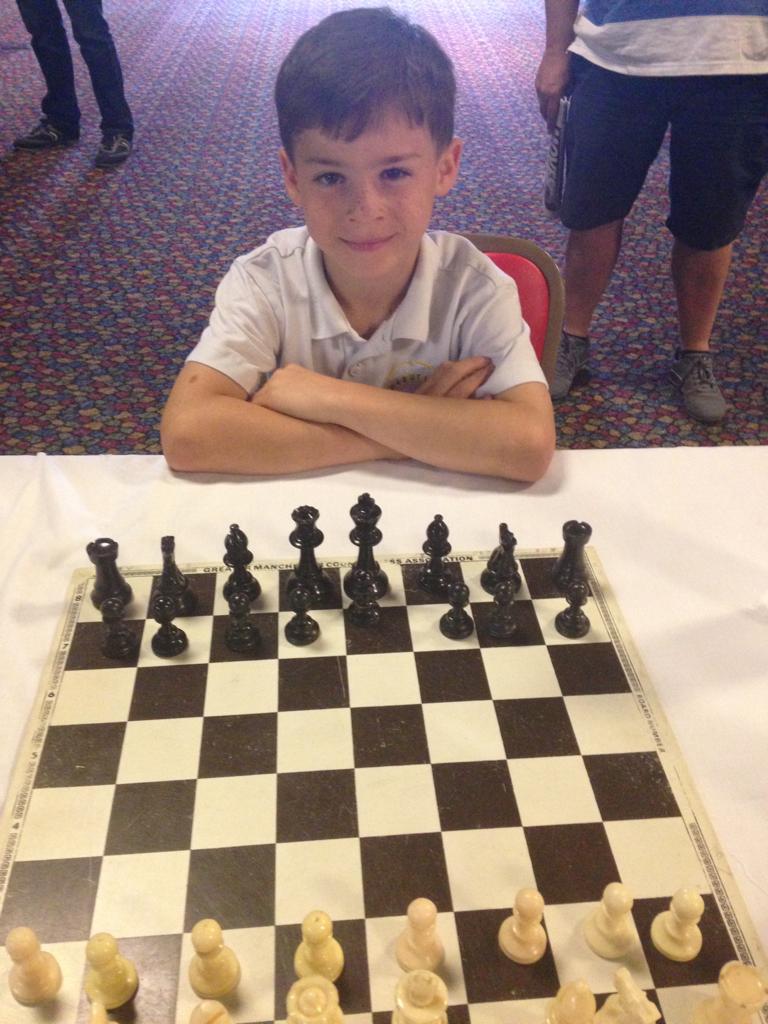
Young Connall at a chess tournament
"Move more and dare to be creative."
— Dr. Julie Angel, on "Why Didn't Anyone Tell Me This?" S4 E11

Professor Harper's Pillars of Happiness

Health keeps you alive. Happiness makes the living worthwhile.

Beyond Health: The Happiness Framework

In "Your Joyful Years," Professor Harper distinguishes between Pillars of Health and Pillars of Happiness. Health is the foundation — but happiness is the point. Her happiness pillars include:

  • Hobbies — structured activities that bring joy and stimulate the mind in new ways.
  • Creativity — artistic expression, writing, music, cooking. The brain needs to create, not just consume.
  • Adventures & Challenges — cold-water swimming, hiking, travel. Joyce is a keen open-water swimmer and This Girl Can ambassador who organises retreats in Brighton and the South of France.
  • Relaxation — being still. Her advice to her younger self: "Spend more time being still." This is relaxation as a deliberate practice, not as laziness.
  • Quality Time Alone — Joyce attempted "silent days" in 2024, finding it challenging but valuable. Solitude isn't loneliness — it's recharging.
  • A Sense of Purpose — which ties directly back to Pillar One: Ambition.

Cognitive Benefits of Hobbies

Chess
Pattern Recognition
Music
Neural Connectivity
Swimming
Stress Regulation
Creative Writing
Emotional Processing
Cold-Water Swimming
Mental Resilience

Relative cognitive benefits from systematic reviews (Frontiers in Psychology, 2020)

The Hobbies That Built This Philosophy

Chess: The Athlete's Brain Trainer

Representing my county of Essex at chess wasn't just a childhood quirk — it was training my brain to process complex information under pressure. A 2016 study in Current Biology found that chess players develop superior pattern recognition, working memory, and decision-making speed. These are the exact cognitive skills that separate good athletes from great ones.

The transfer: Reading a defence on the pitch is chess at 100mph. Knowing when to break the defensive line with a pass, when to make a run that drags a centre-back out of position, when to play a first-time through ball instead of taking a touch — that's all pattern recognition and forward thinking. Chess trained me to process these decisions slowly and deliberately; football demanded I do them at pace. The foundation was the same.

Swimming & Cold Water: The Family Tradition

My mum is a passionate open-water swimmer and This Girl Can ambassador. She's also an ambassador for cold-water wellness, organising retreats that combine yoga and cold-water swimming. I grew up swimming competitively, and it taught me something football never could: breath control under discomfort.

Joe Baynham, the Wim Hof instructor who appeared on Joyce's podcast (S4, E5), is Essex-based and founded the Coggeshall Cold Water Dippers. His mantra — "Where the breath goes, the mind and the body will follow" — captures why cold-water immersion isn't just a hobby. It's a mental resilience laboratory.

Calisthenics: The Daily Practice

I still do calisthenics today. Every day. It's not just exercise — it's a hobby because I genuinely love the progression. First a pull-up. Then a muscle-up. Then a handstand. Now I'm repping out handstand push-ups — something I couldn't have dreamed of when I started. The journey never ends. It teaches patience, humility, and the kind of functional upper-body strength and grip that comes in handy during a 50-50 challenge on the pitch.

The philosophy connection: Calisthenics is the embodiment of "trust the process." You can't skip steps. You can't buy your way to a handstand push-up. You earn it, rep by rep — one session, one hold, one failure at a time. Sound familiar?

"Feel good — your way. There is no single path to joy. The important thing is that you find what lights you up and protect time for it."
— Amber Lort-Phillips, on "Why Didn't Anyone Tell Me This?" S4 E7

The Multi-Sport Advantage

Football, swimming, cross-country, cricket, aquathlon, chess, calisthenics. People call that "scattered." Science calls it diversified athletic development.

The American Academy of Pediatrics recommends that young athletes participate in multiple sports until at least age 12 to reduce injury risk and burnout. The data shows that multi-sport athletes outperform single-sport specialists at the collegiate and professional level by significant margins.

Swimming built my cardiovascular base. Cross-country built my mental toughness. Cricket taught me to wait — to be patient when nothing was happening. Aquathlon taught me to transition between modes instantly. Chess taught me to think. And football? Football taught me to love the game enough to do all the rest.

This philosophy doesn't just recommend hobbies for their own sake — it argues that breadth creates depth. The more systems you train, the more adaptable you become. And adaptability is the ultimate competitive advantage.

0
Sports & Disciplines
0
Of D1 Athletes Were Multi-Sport

"I am a cold-water swimmer. Expect some episodes about swimming! Because there is nothing quite like the feeling of cold water to reset your mind and remind you that you're alive."

— Professor Joyce Harper, introducing her podcast

How to Find (and Protect) Your Hobbies

Schedule Joy Like an Appointment

If it's not in your calendar, it won't happen. Block out hobby time the same way you block out training and study. Petra Coveney, who discussed yoga on Joyce's podcast (S4, E4), calls this "non-negotiable self-investment."

Try Something That Scares You

Adventures and challenges are a pillar of happiness for a reason. Sign up for that open-water swim. Enter a chess tournament. Try a new climbing wall. Discomfort is where growth lives — and growth is where happiness lives.

Create, Don't Just Consume

Dr. Julie Angel told Joyce's audience to "move more and dare to be creative." Creativity — writing, music, art, cooking — activates different neural pathways than consumption. The brain that creates is healthier than the brain that scrolls.