Before you fix your sleep, your diet, or your training — you need to know why you're fixing them. This pillar is the compass. Everything else is the journey.
Vague goals produce vague results. Here's how to fix that.
Here's what nobody tells you when you're starting out: ambition without specificity is just daydreaming with your eyes open. I know because I did it for years. "I want to be a professional footballer." Grand. Beautiful. Completely useless as an actionable plan.
When Cambridge United released me at fifteen, I didn't just lose a dream — I lost the only framework I had for understanding what success meant. And when I arrived at university with that same shapeless ambition — "I'll do well" — the 1.6 GPA proved that wishful thinking doesn't survive contact with reality.
The shift came when I stopped saying "I want to do better" and started asking: Better at what? By when? Measured how? That's not just productivity-guru nonsense — it's how the brain actually works.
"Vision boards have profoundly impacted my life direction and goal-setting."— Professor Joyce Harper, "Why Didn't Anyone Tell Me This?" S3 E1
Research in behavioural neuroscience shows that when you set a specific, challenging goal, your brain activates the prefrontal cortex — the same region responsible for planning, decision-making, and impulse control. A study published in the American Journal of Lifestyle Medicine found that individuals who wrote down their goals were 42% more likely to achieve them than those who simply thought about them.
My mum has spoken extensively about the power of vision boards — both on her podcast and in her personal life. It sounds a bit soft for a scientist, doesn't it? But Joyce Harper doesn't do "soft." She does evidence. And the evidence shows that visual goal representation activates the reticular activating system (RAS) in the brain, essentially training your brain to notice opportunities aligned with your goals.
Professor Harper developed her own Wheel of Health and Happiness — a framework that maps every dimension of well-being into a visual model. It's the same principle: make the abstract concrete, make the invisible visible, and your brain starts working for you instead of against you.
Based on research by Dr. Gail Matthews, Dominican University of California
Four steps. No fluff. This is how I rebuilt after hitting rock bottom.
Not "be better." Not "get fit." The specific, measurable thing. Mine was: "Finish this semester with a GPA that reflects my intelligence while maintaining my athletic eligibility." Yours might be different — but it needs to be sharp.
Your goal doesn't exist in isolation. Academic performance requires sleep (so you can focus), nutrition (so your brain works), exercise (so your stress doesn't eat you alive), and relationships (so you have people who hold you accountable).
Goals are destinations. Systems are the vehicle. I didn't just "try harder" — I built a daily structure: wake time, study blocks, training, meal prep, sleep hygiene. The system doesn't care how you feel on a Tuesday morning. It just runs.
Every Sunday night, I sit down and ask three questions: What worked? What didn't? What do I change? My mum does the same with her research — test, observe, adjust. That's not just science. That's life done properly.
Every setback was a setup. Every failure was data.
Played my first fixture aged four. Spent most of it picking my nose on the halfway line. But something clicked. Football had found me.
Joined the youth academy. Football became identity. Trained alongside swimmers, cricketers, and cross-country runners — but football was king.
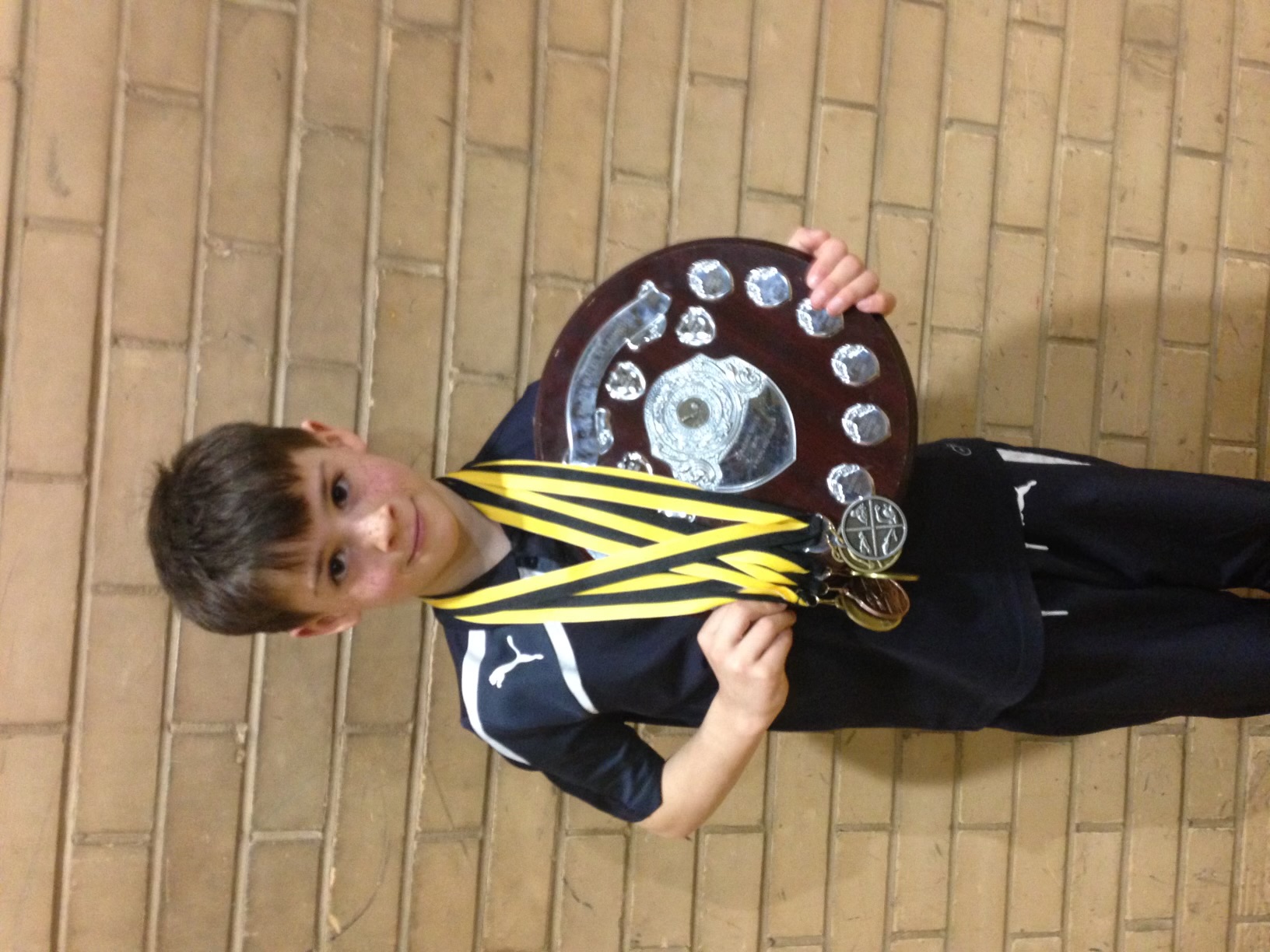
Swimming, cross-country, cricket, aquathlon, and chess — representing my county of Essex in chess competitions. Didn't know it then, but this cross-training was building the foundation for everything. Chess sharpened the football brain; sport toughened the body.
Cambridge United released me. Eight years, gone. The identity crisis that followed was the first crack in the old way of thinking.
Arrived at university as a Division I athlete. Midterm GPA: 1.6. The wake-up call. The catalyst. The moment the philosophy was born out of necessity.
Built the system. Applied the pillars. Turned the transcript into something that actually reflected who I am — while maintaining athletic performance. Proof that the philosophy works.
Still training calisthenics. Still studying Business Management. Still refining the system. Now sharing it — because if it worked for me, it can work for anyone willing to do the work.
"Your Fertile Years is the book I would have liked to read when I was 25. I still stand by it."— Professor Joyce Harper, on evidence-based living
You've identified the goal. Now let's build the body and mind to achieve it.